

Naming private body parts is one of the initial steps that both schools and parents take to educate children about sex in a respectful and age-appropriate manner.
-
Protection from Abuse:
When kids know the correct names for their private parts, it can help protect them from people who might want to hurt them in a bad way. If someone does something they’re not comfortable with, they’ll know how to tell you about it.
-
Reporting Abuse:
If, heaven forbid, something bad happens to them, knowing the right names can help them explain what happened more clearly, so you can help them better.
-
Feeling Good About Themselves:
Teaching your child the proper names for their body parts can make them feel better about their own bodies. It’s like saying it’s okay to be you.
-
Higher Self-Esteem:
This means feeling good about who they are, and it’s important for kids to have good self-esteem. Knowing about their bodies helps with this.
-
Open and Honest Talks:
By talking openly about these things, you’re letting your child know they can talk to you about anything else too. It creates trust and shows them that you’re there to help and answer their questions. We can’t always be there to protect your child every moment. So, it’s important to give them the knowledge and confidence to talk to you when they need to, especially about things that might be confusing or troubling to them. This way, you can be the person they turn to when they have questions or concerns.
Teach them the following names: Nipples, Breasts, Bottom, Penis, Vagina, and Anus.
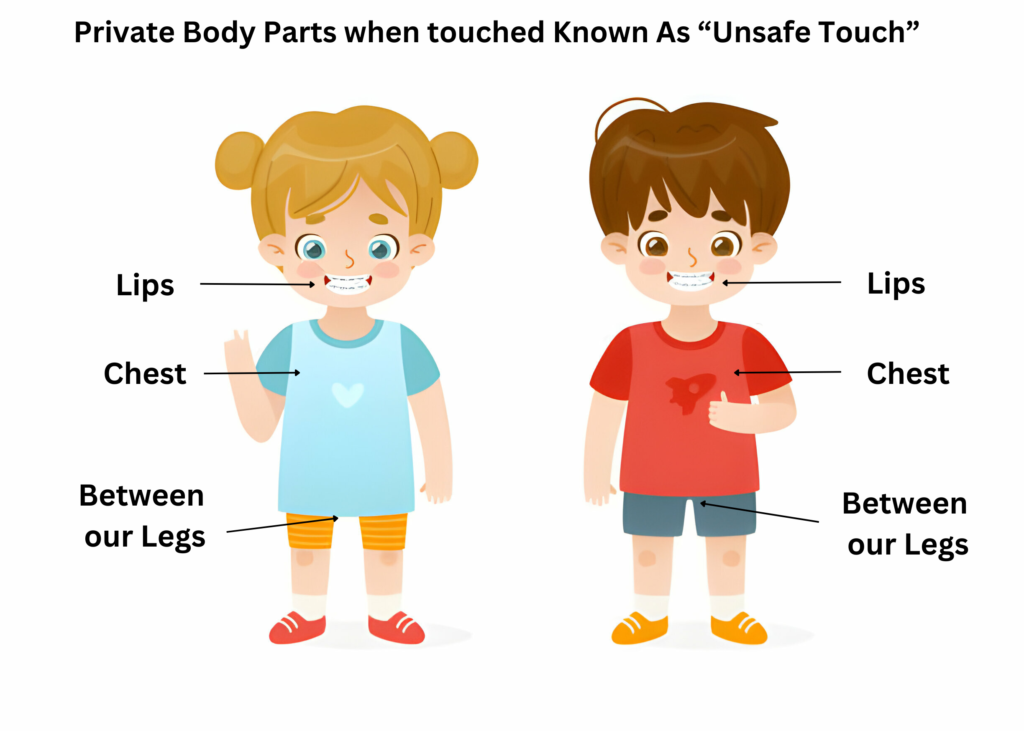
What is Good Touch and Bad Touch
Good Touch and Bad Touch are concepts taught to kids to help them understand and distinguish between appropriate and inappropriate physical contact:
-
Good Touch:
A “good touch” is a type of physical contact that makes a child feel safe, happy, and comfortable. It includes actions like hugs from trusted family members, holding hands, or a gentle pat on the back. These touches are usually made with care and love and should not cause any discomfort or fear. A touch between friends such as a high five, handshake or side hug Good touch – A helping touch by a trusted adult such as parent or teacher.
-
Bad Touch:
A “bad touch” is physical contact that feels uncomfortable, scary, or wrong. It includes actions like hitting, pushing, inappropriate touching of private body parts, or any touch that makes a child feel upset, frightened, or confused. Children should be taught to recognize and report bad touches to a trusted adult.
It's important to teach children about good and bad touches to help them stay safe and understand their boundaries. Parents and caregivers should encourage open communication so that children feel comfortable discussing these topics and seeking help if they experience a bad touch.
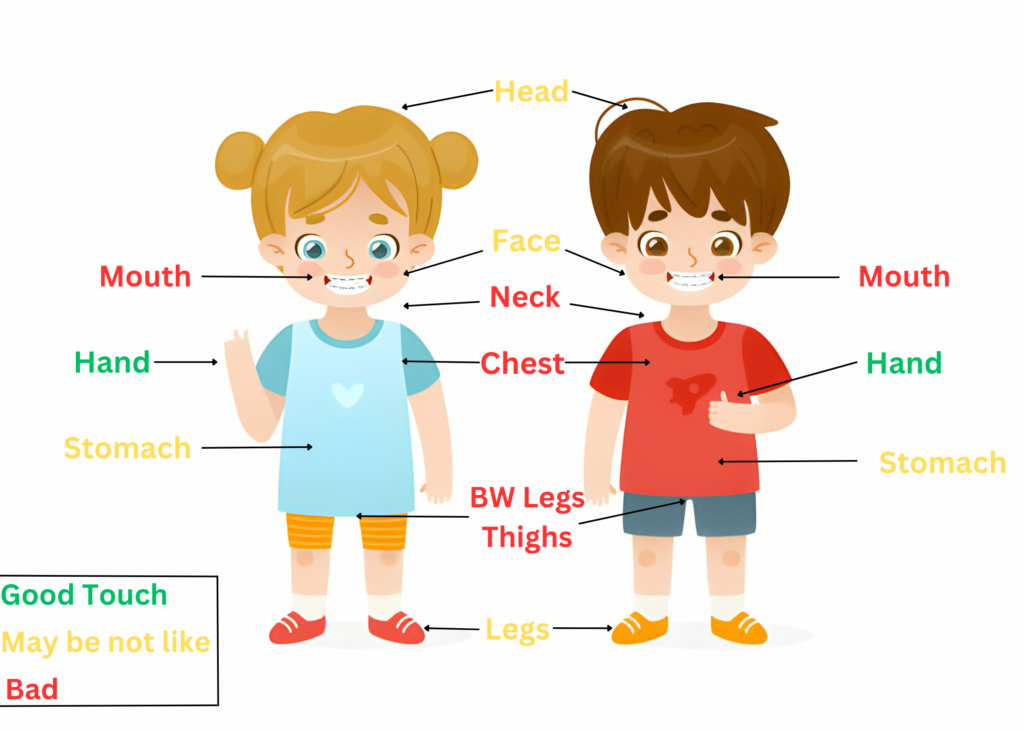
Who can touch you?
Parents and Caregivers: Mom, Dad, or the primary caregivers are usually the first people a child trusts and who can provide loving and comforting touches. It's important to teach children that even in "good touch" situations, they always have the right to say "no" if they feel uncomfortable.
Bed touch how to stay stop and what to do
Teaching children about recognizing and responding to "bad touch" or inappropriate contact is crucial for their safety. Here's how to explain it to children:
-
Recognizing a Bad Touch:
Teach your child that a “bad touch” is one that makes them feel uncomfortable, scared, or confused. These touches might hurt or feel wrong. Make sure they understand that certain areas of their body are private, and nobody should touch them in those areas without a good reason (like a doctor during a check-up), and even then, a parent or trusted adult should be present.
-
Saying “Stop” or “No”:
Encourage your child to say “stop” or “no” if someone touches them in a way that makes them uncomfortable. Explain that it’s okay to speak up and let the person know that they don’t like the touch.
-
Get Away:
Teach your child that if someone is touching them inappropriately, they should try to move away from that person as quickly as possible. They can create physical distance and find a trusted adult for help.
-
Tell a Trusted Adult:
Emphasize to your child that they should always tell a trusted adult about a bad touch. Let them know that it’s safe to talk to parents, teachers, or other adults they trust, even if the person who did the bad touch told them not to say anything.
-
Don’t Keep Secrets:
Teach your child that no one should ask them to keep a touch a secret, especially if it’s a touch that makes them uncomfortable. Make it clear that they should always share such experiences with a trusted adult.
-
Trust Your Feelings:
Remind your child to trust their feelings. If something doesn’t feel right, it’s important to speak up and let someone know.
-
Practice Scenarios:
Role-play various situations with your child to help them practice saying “stop,” getting away, and telling a trusted adult. This can boost their confidence in knowing what to do in real-life situations.