
Puberty –
Puberty is the biological process of sexual maturation characterized by the development of secondary sexual characteristics, such as the growth of reproductive organs, the start of menstruation in females, and the deepening of the voice and facial hair growth in males. This transitional period typically occurs during adolescence, marked by hormonal changes that lead to physical, reproductive, and psychological maturity.
What are the sing and symptoms of Puberty?
-
Growth:
Rapid increase in height is a common early sign of puberty.
-
Body Odor:
Increased sweat production and the development of body odor due to changes in sweat gland activity.
-
Acne:
The start of acne or pimples, often due to increased oil production in the skin.
-
Hormonal Mood Swings:
Fluctuations in hormones can lead to mood swings, irritability, and emotional sensitivity.
-
Changes in Sleep Patterns:
Shifts in sleep-wake cycles, potentially leading to altered sleep patterns.
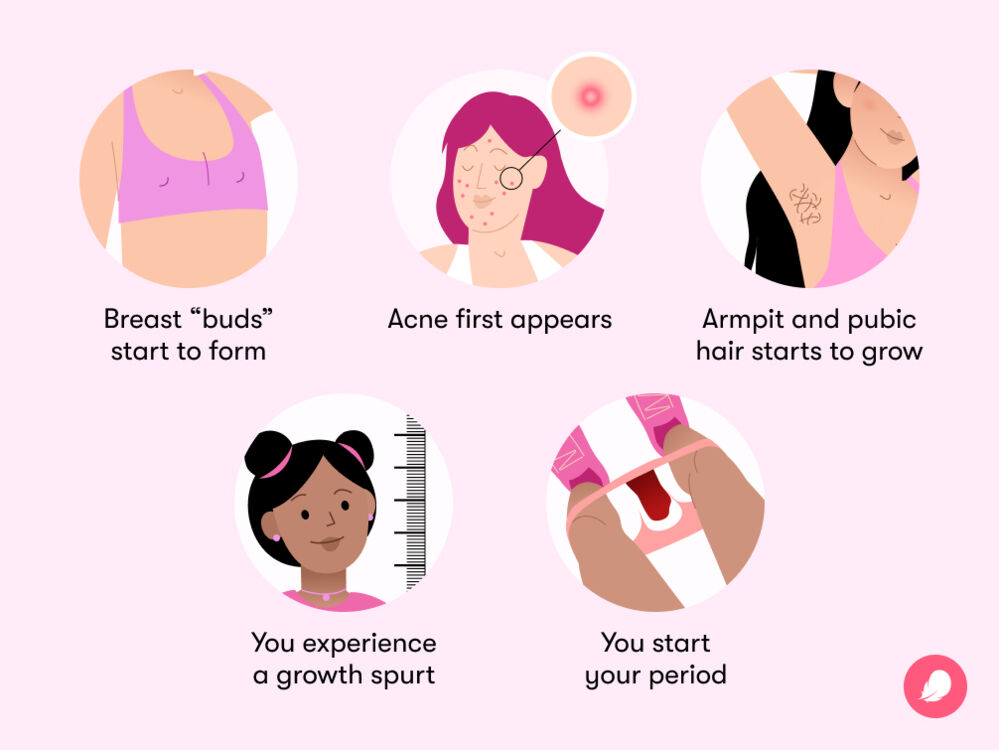
Signs and Symptoms in Females:
-
Breast Development:
Enlargement of breast tissue, often starting with the appearance of breast buds.
-
Menstruation:
Start of the menstrual cycle, usually occurring later in puberty.
-
Growth of Pubic and Axillary Hair:
Development of rough and pigmented hair in the genital and underarm areas.
-
Widening of Hips:
Changes in hip width and body composition, contributing to a more feminine physique.
Signs and Symptoms in Males:
-
Testicular and Penile Growth:
Enlargement of the testicles and growth of the penis.
-
Deepening of the Voice:
Changes in vocal cords result in a deeper voice.
-
Facial and Body Hair Growth:
Development of facial hair, body hair, and the growth of a Mustache and beard.
-
Spermarche:
The first occurrence of sperm in ejaculation.
Additional Changes in Both Genders:
-
Muscle Development:
An increase in muscle mass and overall body strength.
-
Skin Changes:
Changes in skin texture, oiliness, and potential development of acne.
-
Body Fat Redistribution:
Changes in body fat distribution, particularly in the hips and thighs in females.
-
Emotional and Psychological Changes:
Exploration of identity, increased self-awareness, and evolving emotional intelligence.
It’s important to note that the timing and progression of puberty can vary widely among individuals, and not everyone will experience these changes at the same rate or in the same sequence. If there are concerns or questions about the signs and symptoms of puberty, consulting with healthcare professionals can provide valuable guidance and reassurance.
What is pubic hairs??
Pubic hair refers to the thick, curly hair that grows in the genital and pelvic region during puberty. It is one of the secondary sexual characteristics that develop as a result of hormonal changes associated with sexual maturation. Pubic hair growth is a natural and normal part of human development, and its presence signifies the onset of puberty.
Key features of pubic hair include:
-
Location:
Pubic hair grows in the genital area, extending from the pubic bone down to the thighs. It covers the mons pubis (the rounded, fatty area over the pubic bone), extends to the labia majora in females, and can spread to the base of the penis and scrotum in males.
-
Texture and Color:
Pubic hair is typically thick and curlier than the hair on the scalp. The colour can vary and may be lighter or darker than the hair on other parts of the body.
-
Start of Growth:
The development of pubic hair is one of the early signs of puberty, usually occurring around the same time as other physical changes such as testicular and breast development. Pubic hair growth is stimulated by androgens, including hormones like testosterone and DHEA (dehydroepiandrosterone).
-
Progression:
Pubic hair growth often begins as soft, fine hairs and gradually becomes coarser and darker over time. The pattern of growth can vary among individuals, and the extent of coverage may differ.
-
Function:
While the exact function of pubic hair is not fully understood, it is believed to play a role in trapping and disseminating pheromones, which are chemical signals related to sexual attraction and reproduction.
-
Cultural and Personal Practices:
The grooming and removal of pubic hair are influenced by cultural, social, and personal preferences. Some individuals choose to trim, shave, or remove pubic hair for aesthetic reasons, hygiene, or personal comfort.
It’s important to note that the development of pubic hair is a normal part of sexual maturation, and its presence is an indication of physical growth and reproductive maturity. If there are concerns or questions about pubic hair development, individuals may seek guidance from healthcare professionals for information and support.
Development of Body Part –
The development of body parts and the growth of pubic hair are part of the process of puberty, which is a natural and normal stage of human development. Puberty typically occurs during adolescence, usually between the ages of 9 and 16, but the timing can vary widely among individuals.
Girls
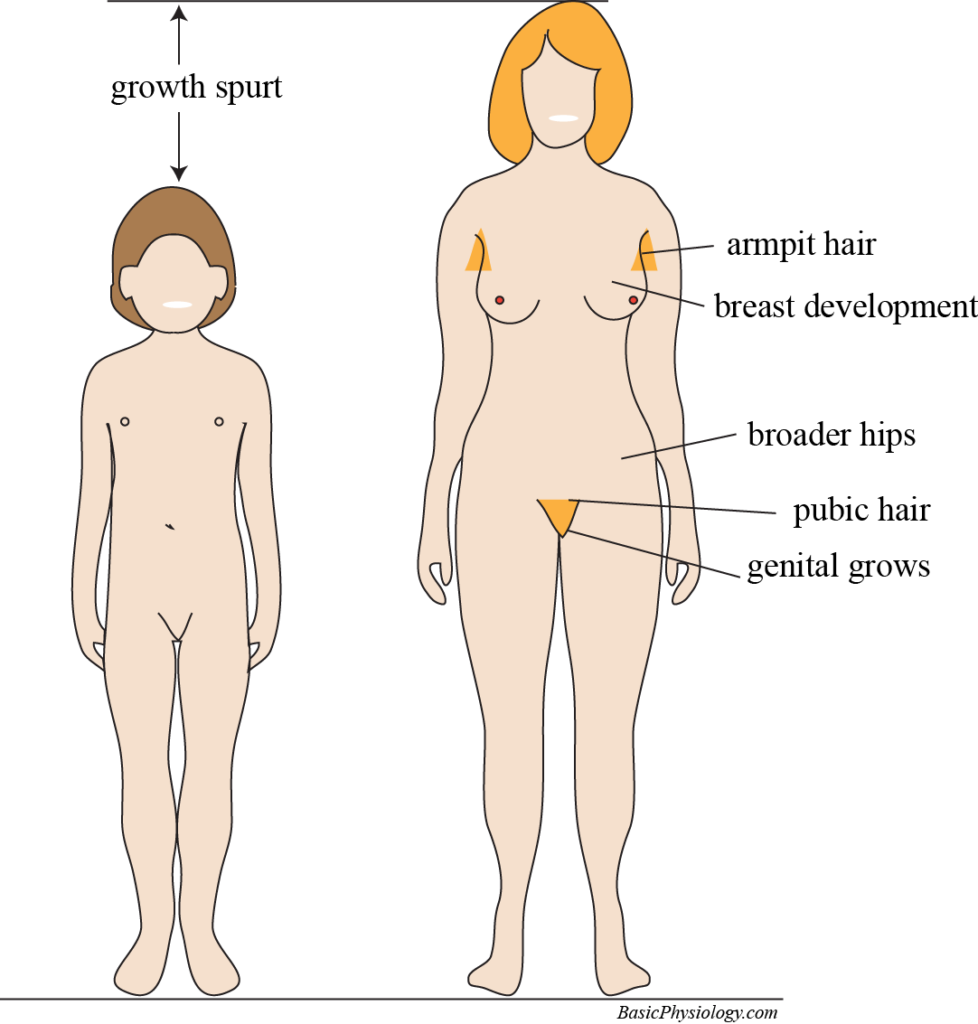
1. Breast Development:
-
Timing:
The start of breast development, also known as thelarche, typically begins between the ages of 8 and 13 but Some girls may experience it as early as 7 or as late as 15.
-
Individual Differences:
Genetics, nutritional status, and overall health can influence when breast development begins.
-
Hormonal Influence:
Estrogen: This hormone, produced by the ovaries, stimulates the growth of glandular tissue in the breasts.
Progesterone: Another hormone produced by the ovaries; it works in conjunction with estrogen to prepare the breast tissue for potential pregnancy. -
Stages:
Breast Buds: The first sign is the appearance of small, firm lumps under the nipple. These buds are composed of milk ducts and glandular tissue.
Growth: Over time, the breasts become fuller and more rounded as additional glandular and fatty tissue develops.
Areola and Nipple Development: The areola (the darker area around the nipple) and the nipple undergo changes in colour, size, and shape.
2. Menstrual Cycle:
-
Timing:
Menstruation typically starts around 12 to 14 years old, but it can occur earlier or later.
-
Menarche:
The first occurrence of menstruation marks a key milestone in a girl’s physical development.
-
Hormonal Influence:
Estrogen and Progesterone: These hormones orchestrate the menstrual cycle, a monthly process involving the maturation and release of an egg, preparation of the uterus for potential pregnancy, and shedding of the uterine lining if pregnancy doesn’t occur.
-
Cycle Phases:
Menstrual Phase: The first phase involves the shedding of the uterine lining, resulting in menstruation.
Follicular Phase: Hormones stimulate the development of an egg within a follicle in the ovary.
Ovulation: The release of a mature egg from the ovary.
Luteal Phase: The uterus prepares for a possible pregnancy.
3. Body Hair:
-
Pubic Hair:
Start: Pubic hair growth coincides with the onset of puberty, usually between the ages of 8 and 14.
Androgens: Hormones like DHEA, produced by the adrenal glands, stimulate the growth of pubic hair.
Progression: Pubic hair starts as fine, straight, and light-coloured, gradually becoming coarser, darker, and more pigmented over time. -
Axillary Hair:
Timing: Growth of hair in the armpit (axillary hair) typically follows the development of pubic hair.
Androgen Influence: Similar to pubic hair growth, androgens play a role in the development of axillary hair.
4. Body Fat Distribution:
-
Hormonal Changes:
Estrogen Influence: As estrogen levels rise during puberty, there is an increase in subcutaneous fat, particularly in the hips and thighs.
Body Composition Changes: These changes contribute to the development of a more feminine body shape.
5. Growth Spurt:
-
Timing:
Earlier Start: Girls usually experience a growth spurt before boys, typically between the ages of 9 and 14.
Individual Variation: The exact timing and duration of the growth spurt can vary. -
Height Increase:
Significant Growth: During the growth spurt, girls may experience a significant increase in height.
Bone Growth: The long bones in the legs and arms lengthen as a result of growth plate activity.
6. Emotional and Psychological Changes:
-
Emotional Maturity:
Identity Formation: Puberty involves not only physical changes but also emotional and psychological development.
Individual Responses: Emotional responses to puberty vary, and girls may navigate changes in self-identity, body image, and social dynamics.
Conclusion
The detailed overview above emphasizes the intricate and interconnected processes involved in the body parts development of girls during puberty. It's crucial to recognize the individuality of these experiences and to approach the topic with sensitivity and support. If there are concerns or questions, seeking guidance from healthcare professionals, educators, or trusted adults can provide valuable assistance tailored to individual needs.
Boy
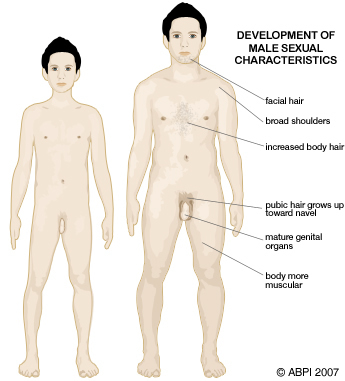
1. Testicular and Penile Growth:
-
Timing:
Puberty start in boys usually begins between 9 and 14 years old.
-
First Signs:
The initial sign is often testicular enlargement, marking the activation of the reproductive system.
-
Hormonal Influence:
Testosterone: The surge in testosterone production from the testes triggers the growth and development of the testicles and penis.
Androgens: Hormones, including testosterone, play a crucial role in secondary sexual characteristics development. -
Stages:
Testicular Enlargement: The testicles grow larger and become more prominent, signalling the beginning of sperm production.
Penis Growth: The penis undergoes growth in both length and girth, accompanying overall physical maturation.
2. Pubic Hair Development:
-
Timing:
Pubic hair growth typically starts concurrently with testicular enlargement.
-
Hormonal Influence:
Androgens: Testosterone stimulates the growth of pubic hair, initiating the development of adult-like body hair patterns.
-
Progression:
Hair Texture: Initially, pubic hair is fine and straight, gradually becoming coarser, thicker, and darker over the course of puberty.
3. Facial and Body Hair Growth:
-
Timing:
Facial hair growth, including the appearance of a Mustache and beard, usually commences later in puberty.
-
Hormonal Influence:
Testosterone: Higher levels of testosterone contribute to the development of facial and body hair.
-
Progression:
Individual Variation: The pattern and density of facial and body hair exhibit considerable individual differences.
Axillary Hair: Hair in the armpit (axillary hair) also develops as part of overall body hair growth.
4. Voice Changes:
-
Timing:
Voice deepening typically occurs during mid to late puberty.
-
Hormonal Influence:
Testosterone: This hormone prompts the lengthening and thickening of the vocal cords.
-
Progression:
Cracking and Breaking: The voice may go through a period of cracking or breaking as the vocal cords adjust.
Permanent Changes: Voice deepening is a permanent change, signaling the maturity of the larynx and vocal apparatus.
5. Muscle and Body Mass Development:
-
Timing:
The increase in muscle mass and body growth is evident throughout puberty.
-
Hormonal Influence:
Testosterone: This hormone contributes significantly to the development of lean muscle mass and a more masculine physique.
-
Progression:
Body Composition: Boys experience changes in body composition with an increase in muscle-to-fat ratio.
Strength Increase: The development of greater physical strength accompanies the overall growth and maturation.
6. Growth Spurt:
-
Timing:
Boys typically experience a growth spurt later than girls, usually between the ages of 10 and 16.
-
Height Increase:
Significant Growth: During the growth spurt, boys may experience a significant increase in height.
Epiphyseal Closure: Growth plates in the bones close toward the end of puberty, signaling the end of significant height increase.
7. Emotional and Psychological Changes:
-
Emotional Maturity:
Identity Formation: Puberty involves emotional and psychological development for boys.
Hormonal Impact: Fluctuations in hormones, including testosterone, can influence mood, behaviour, and emotional responses. -
Individual Responses:
Self-Identity: Boys may navigate changes in self-identity, body image, and social dynamics.
Social Relationships: The development of emotional intelligence becomes an essential aspect of forming and maintaining social relationships.
Conclusion
The detailed overview emphasizes the complex and interconnected processes involved in the body parts development of boys during puberty. It is crucial to recognize the individuality of these experiences and to approach the topic with sensitivity and support. If there are concerns or questions, seeking guidance from healthcare professionals, educators, or trusted adults can provide valuable assistance tailored to individual needs.
How Can Parents help in puberty
Parents play a crucial role in supporting their children through the physical, emotional, and psychological changes that come with puberty. Here are several ways parents can help their children navigate this important phase of development:
1. Open Communication:
-
Create a Safe Environment:
Foster an open and non-judgmental atmosphere where children feel comfortable discussing their thoughts, concerns, and questions about puberty.
-
Initiate Conversations:
Start conversations about puberty before it begins. Provide accurate information in an age-appropriate manner.
2. Educate About Puberty:
-
Explain Physical Changes:
Help children understand the biological changes they will experience, including growth spurts, hormonal changes, and the development of secondary sexual characteristics.
-
Provide Resources:
Share educational books, articles, or videos that explain puberty in a clear and informative way.
3. Normalizing Changes:
-
Emphasize Normalcy:
Reinforce that the changes associated with puberty are normal and a part of growing up. Everyone goes through it, and variations in timing and pace are common.
4. Provide Personal Hygiene Guidance:
-
Teach Personal Care:
Educate your child on maintaining good personal hygiene, including regular bathing, proper skincare, and using deodorant.
-
Discuss Menstrual Hygiene:
For girls, provide information about menstrual hygiene products and discuss menstrual health openly.
5. Encourage Healthy Habits:
-
Balanced Nutrition:
Encourage a healthy and balanced diet to support overall growth and development during puberty.
-
Physical Activity:
Promote regular physical activity for both physical health and emotional well-being.
6. Address Emotional Changes:
-
Acknowledge Emotions:
Recognize and validate the emotional ups and downs that may accompany puberty.
-
Provide Emotional Support:
Offer a listening ear and emotional support during times of stress or mood swings.
7. Respect Privacy:
-
Respect Boundaries:
Understand that privacy becomes more important during puberty. Respect your child’s need for personal space and boundaries.
8. Offer Guidance on Relationships:
-
Friendships:
Discuss the importance of healthy friendships and offer guidance on navigating social relationships.
-
Dating and Consent:
For older adolescents, provide information about dating, consent, and healthy relationships.
9. Be Available for Questions:
-
Encourage Questions:
Let your child know that it’s okay to ask questions, and be prepared to provide honest and age-appropriate answers.
-
Provide Reliable Information:
Correct any misconceptions and ensure that your child has accurate information about puberty.
10. Seek Professional Guidance if Needed:
-
Healthcare Professionals:
If you or your child have specific concerns or questions, consider consulting with a healthcare professional, such as a pediatrician or an adolescent medicine specialist.
11. Celebrate Milestones:
-
Positive Reinforcement:
Celebrate the milestones of puberty as positive developments and steps toward adulthood.
Remember that every child is unique, and the support needed may vary. Being a supportive and understanding presence during this time can significantly contribute to a child’s overall well-being and confidence as they navigate the challenges of puberty.
Supporting Puberty in Females:
-
Menstrual Education:
– Provide information about menstruation before it starts.
– Discuss various menstrual hygiene products and their usage.
– Ensure access to necessary products and educate on proper disposal. -
Breast Health:
– Encourage regular breast self-exams to promote awareness.
– Discuss the importance of regular check-ups, including gynaecological examinations. -
Emphasize Body Positivity:
– Promote a positive body image and self-esteem.
– Discuss that variations in body development are normal. -
Encourage Open Communication:
– Create an environment where discussing menstrual health, emotions, and body changes is encouraged.
– Address any concerns or misconceptions about female anatomy. -
Provide Emotional Support:
– Acknowledge the emotional aspects of puberty, such as mood swings and changes in self-identity.
– Offer support and understanding during emotional challenges.
Supporting Puberty in Males:
-
Testicular Health:
– Encourage awareness of testicular health and regular self-exams.
– Emphasize the importance of seeking medical attention for any concerns. -
Voice Changes and Facial Hair:
– Discuss the expected changes in voice and the growth of facial and body hair.
– Guide on shaving techniques if necessary. -
Educate About Reproductive Health:
– Provide information on sperm production and the reproductive system.
– Discuss safe sex practices and the importance of mutual consent in relationships. -
Promote Healthy Masculinity:
– Encourage healthy expressions of masculinity and discourage harmful stereotypes.
– Discuss respect, consent, and healthy relationships. -
Physical Changes:
– Discuss muscle development, body growth, and the importance of a healthy lifestyle.
– Promote physical activities to support overall well-being.